Aalamdar

A capital of memory and ambition

Ankara

Set on the high plateau of Central Anatolia, Ankara became the capital of the Republic of Türkiye in 1923. Behind its government buildings and broad avenues lies a much older city of Roman temples, a hilltop citadel and one of the world's finest archaeological museums.

Scroll to explore

The city

Getting to know Ankara

From ancient Ancyra to a modern capital

People have lived on Ankara's citadel hill since prehistoric times. Phrygians, Galatians, Romans, Byzantines, Seljuks and Ottomans all left their mark, and the Roman Temple of Augustus still preserves one of the most complete copies of the emperor's account of his own achievements.

When Mustafa Kemal Atatürk chose the then-modest town as the seat of the new republic, Ankara was rebuilt as a planned capital, with ministries, parks, universities and wide boulevards.
A city of students and civil servants

Ankara is orderly, green and thoughtful in character. Large universities give it a young population, while embassies and institutions lend it an international side. Its cultural life centres on concert halls, theatres and museums rather than nightlife.

Ankara keeps its oldest stories on a hilltop and its newest ones on its boulevards.

Anatolian food and a continental climate

Ankara's cooking reflects the Anatolian steppe: hearty stews, grilled meats and Ankara tava, a slow-baked rice and meat dish. The climate is continental, with hot, dry summers and cold, often snowy winters; spring and autumn are the most pleasant seasons to visit.

Healthcare in the capital

Ankara is home to some of Türkiye's leading university and teaching hospitals and research centres. Its airport and high-speed rail links to Istanbul and Konya make it accessible, and its calm pace suits visitors who prefer a quieter base.

Landmarks

Places that tell the story

The sites, streets and landscapes that give the destination its character — with nearby excursions marked as such.

  • Landmark

    Anıtkabir

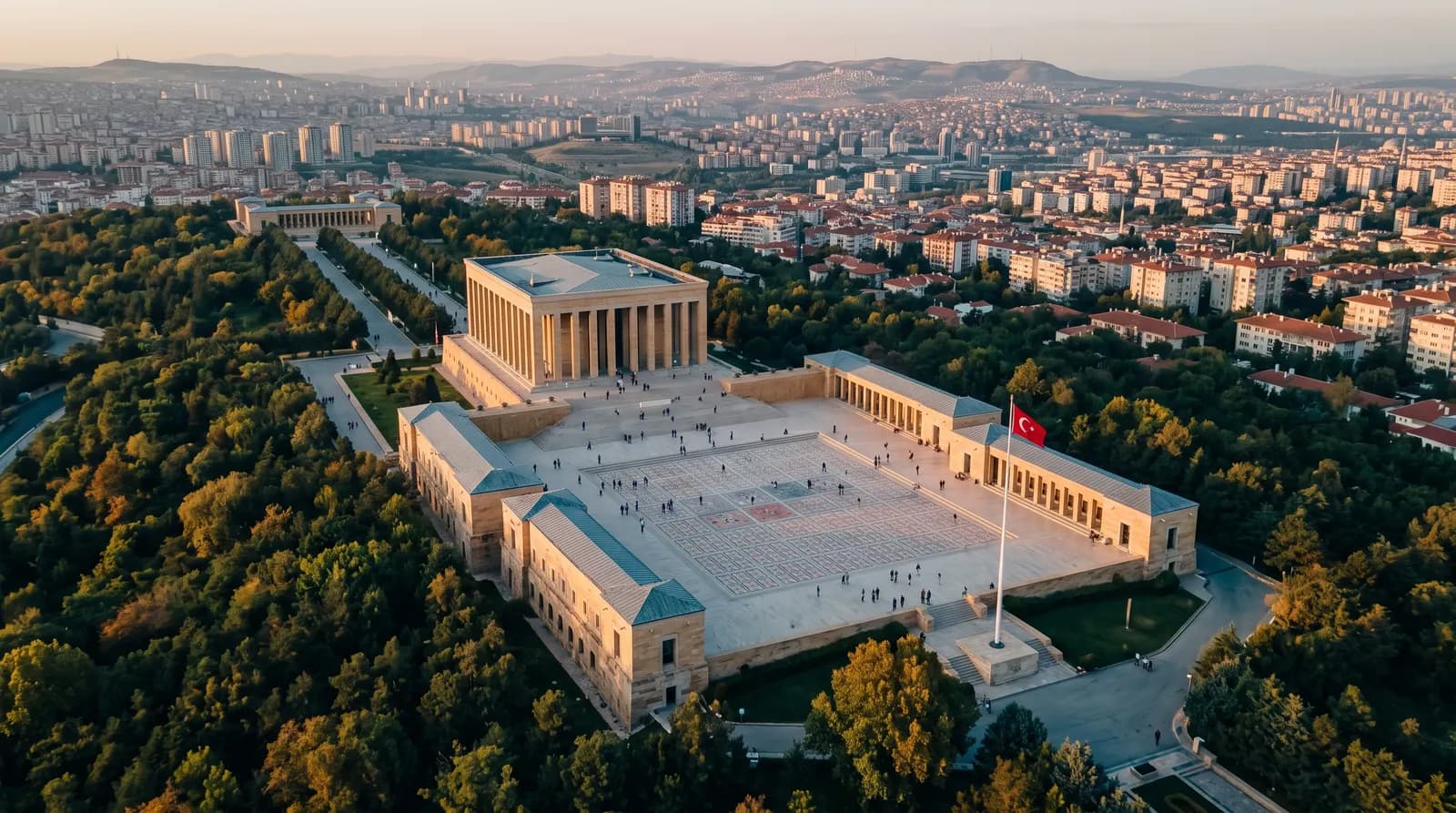
    The monumental mausoleum of Mustafa Kemal Atatürk, founder of the Republic, completed in 1953. A long avenue of stone lions leads to a vast ceremonial square and a museum on the War of Independence.

    Anıttepe, central Ankara

  • Viewpoint

    Ankara Castle

    The citadel crowns the hill where the city began. Its walls, largely Byzantine, enclose a quarter of old houses and narrow lanes, and the ramparts offer a wide view over the capital.

    Ulus, old Ankara

  • Museum

    Museum of Anatolian Civilizations

    Housed in a restored Ottoman covered market and inn, the museum traces Anatolia's history from the Palaeolithic through the Hittite, Phrygian and Urartian periods. It was named European Museum of the Year in 1997.

    Below the citadel, Ulus

  • Sacred architecture

    Kocatepe Mosque

    Completed in 1987 in a classical Ottoman style inspired by the great imperial mosques, it is the largest mosque in Ankara and a landmark of the skyline.

    Kızılay, central Ankara

  • Historic quarter

    Hamamönü

    A restored neighbourhood of traditional timber-framed houses, now home to tea houses, craft shops and small restaurants — a pleasant place to slow down in the old city.

    Altındağ, near the citadel

Rest and renewal

The art of renewal

Quiet settings, traditional bathing culture and landscapes that invite a slower pace — places many visitors seek out before or after a period of care.

  1. 01Natural setting

    Eymir Lake

    A lake within a wooded university campus on the city's southern edge, with a path around the shore that is popular for walking and cycling.

    South of the city centre

    Good to know: The lakeside path is long and largely flat; bring water in summer.

  2. 02Natural setting

    Atatürk Forest Farm

    Founded in 1925 as a model farm, this large green estate offers open space, tree-lined roads and traditional dairy products at its cafés.

    Western Ankara

  3. 03Thermal facilityNearby excursion

    Kızılcahamam

    A small town in forested hills known for its thermal hotels and the nearby Soğuksu National Park, a popular weekend retreat from the capital.

    About 80 km north of Ankara

    Good to know: Thermal bathing is not suitable for everyone; ask your doctor first.

  4. 04Medical facilities

    Hospitals and clinics

    Ankara has leading university and teaching hospitals across many specialties. Our coordinators can help identify appropriate, verified providers.

    Explore Medical Services

These places are offered for general rest and wellbeing. None of them treats or cures a medical condition, and none replaces care or rehabilitation prescribed by your clinician. Suitability depends on your health and mobility — please ask your doctor before planning activities, thermal bathing or travel after a procedure.

Ankara

The character of the city

A capital of memory and ambition

Ankara is a city of contrasts held in balance: the solemn colonnades of Anıtkabir and the lively lanes around the citadel, government quarters and student cafés.

It may not court attention the way coastal cities do, but those who spend time here find a capital that is green, cultured and quietly confident.

“Behind the quiet strength of a capital lies a history that still speaks to the future.”

Healthcare assistance

Planning a journey for your health?

Discover how our team can help coordinate your medical journey in Türkiye, from finding appropriate healthcare providers to organising appointments and related assistance.

Explore Medical Services